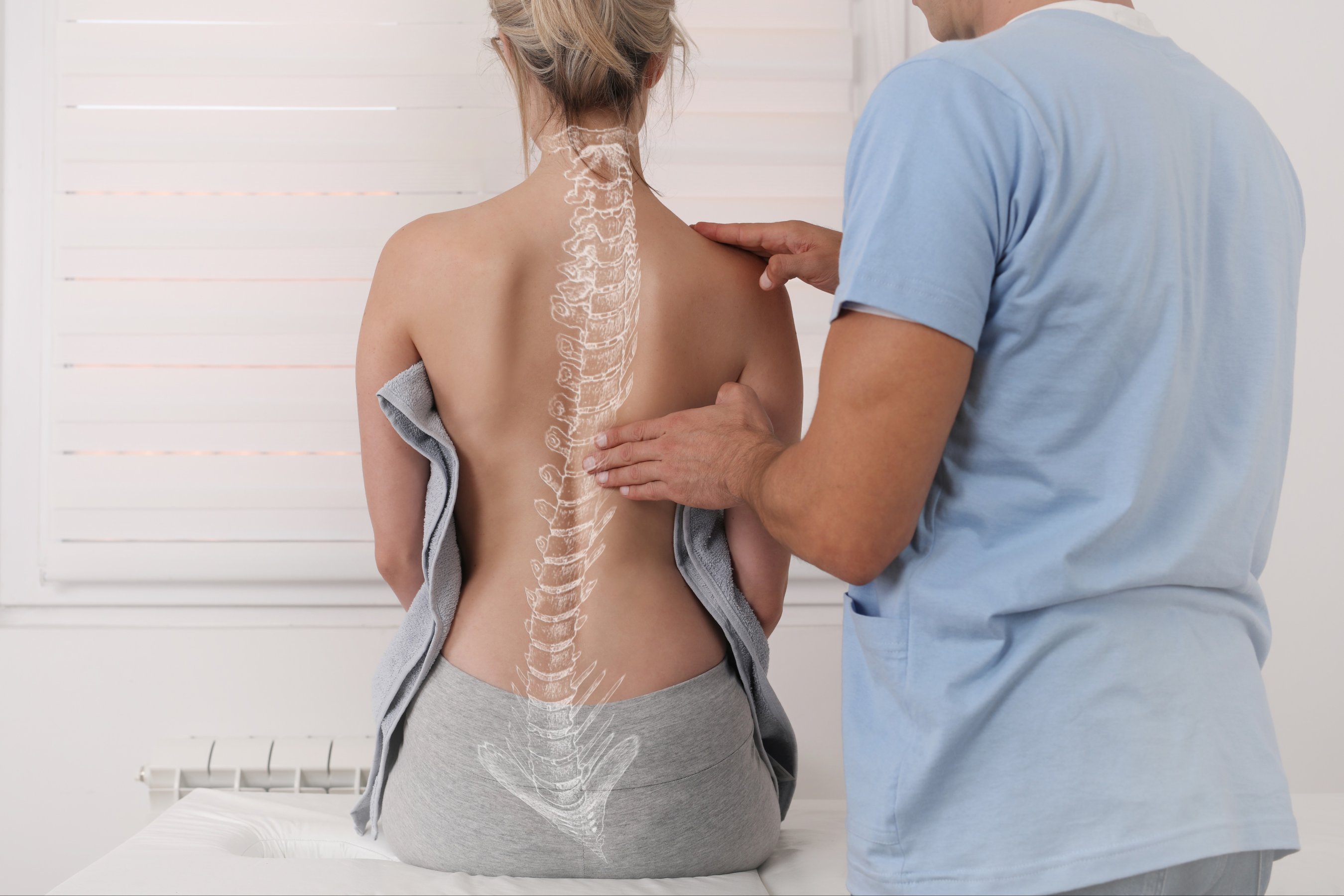
Key Takeaways
- Scoliosis is an abnormal sideways curvature of the spine that can appear as a C-shaped or S-shaped curve.
- Symptoms may include uneven shoulders, changes in posture, back pain, or, more commonly in adolescents, no noticeable discomfort at all.
- Causes vary: children often have idiopathic scoliosis with no known cause, while adults may develop scoliosis from age-related degeneration or progression of childhood scoliosis.
- Treatment options range from posture improvement, low-impact exercises, and physical therapy to bracing and, in more severe cases, surgical correction.
- Barrington Orthopedic Specialists provides expert scoliosis care, including advanced diagnostics, conservative treatment options, surgical correction, and on-site rehabilitation, led by a dedicated spine team featuring Dr. Brooke Belcher, Dr. Richard Rabinowitz, Dr. David Tashima, and Dr. Hans Zhang across Schaumburg, Elk Grove Village, Bartlett, and Buffalo Grove.
Understanding Scoliosis: What You Need to Know
Scoliosis is defined as a sideways curvature of the spine measuring 10 degrees or more, typically forming a C- or S-shaped curve. While everyone has natural spinal curves, scoliosis creates an abnormal alignment that may affect posture, comfort, and mobility. Curves can range from mild to severe, some progressing over time and others remaining stable throughout adulthood.
At Barrington Orthopedic Specialists, patients undergo a thorough evaluation that includes a medical history review, family history screening, physical examination, and X-rays to confirm the degree of curvature and determine the best treatment approach. Early diagnosis is important because scoliosis can progress silently, especially during adolescence or with aging.
Types of Scoliosis
Scoliosis presents differently depending on age, underlying cause, and rate of progression. The two most common forms are Adolescent Idiopathic Scoliosis (AIS) and Adult Scoliosis (AS).
Adolescent Idiopathic Scoliosis (AIS)
AIS is the most common form, typically developing between ages 12 and 18.
Key characteristics include:
- Cause is unknown (“idiopathic”)
- Tends to run in families
- Occurs 5 times more often in females
- Many cases are mild and do not require treatment
- Early diagnosis is essential for monitoring curve progression
How AIS Is Diagnosed
Physicians evaluate spinal alignment during a physical exam, often using the Adam’s forward bending test. Diagnosis is confirmed via standing X-rays, which measure curvature from the front and side.
AIS Treatment Options
Treatment depends on curve severity and the patient’s stage of growth:
| Curve Severity | Common Approach |
|---|---|
| < 25 degrees | Regular monitoring every 4 months with X-rays |
| 25–40 degrees (growing patients) | Bracing to prevent progression |
| > 40 degrees (progressive curves) | Surgical evaluation |
Modern surgical techniques correct curvature with metal screws, rods, or hooks, followed by fusion to stabilize the spine. Postoperative bracing is typically not required.
Adult Scoliosis (AS)
Adult scoliosis occurs after age 18 and falls into two subtypes:
- Continuation of AIS into adulthood
- Curves less than 50 degrees at skeletal maturity often remain stable.
- Degenerative scoliosis (most common after age 50)
- Caused by age-related wear and tear affecting the spine and discs.
- Curves usually remain under 50 degrees but may contribute to back pain and spinal stenosis.
Symptoms of Adult Scoliosis
Adults may experience:
- Lower back pain
- Radiating leg pain caused by spinal stenosis
- Numbness, tingling, or weakness in severe cases
- Postural changes
Adult Scoliosis Diagnosis
Doctors assess spinal curvature through a physical exam and standing X-rays. Patients with leg symptoms may require an MRI to evaluate nerve compression.
Adult Scoliosis Treatment Options
Treatment varies depending on symptom severity:
Conservative Options
- Anti-inflammatory medication
- Walking programs
- Low-impact exercise
- Physical therapy
- Occasional bracing to reduce motion and decrease pain
- Epidural steroid injections for nerve irritation from stenosis
Surgical Options
Surgery is reserved for:
- Progressive curvature
- Significant back pain
- Lower-extremity symptoms due to stenosis
Procedures typically involve:
- Nerve decompression
- Partial correction of the curve
- Stabilization with rods, screws, and bone grafts
These surgeries aim to improve quality of life rather than eliminate pain entirely. Most patients experience meaningful improvement.
Common Symptoms of Scoliosis
Symptoms vary by age and curve severity.
Symptoms in Adolescents
- Uneven shoulders
- Prominent shoulder blade
- Uneven waist or hips
- Body leaning to one side
- Clothing fits unevenly
- Typically, no pain or neurologic symptoms
Symptoms in Adults
- Back pain
- Stiffness
- Leg pain from spinal stenosis
- Tingling or numbness
- Postural imbalance
- Visible curvature of the spine
Recognizing symptoms early supports timely diagnosis and treatment.
What Causes Scoliosis?
While not all cases have a clear cause, scoliosis generally results from the following:
1. Idiopathic Causes (Most Common in Children & Teens)
Idiopathic scoliosis develops without a known cause but often runs in families. This form accounts for up to 80% of all scoliosis cases.
2. Degenerative Causes (Common in Adults)
Age-related changes in bones, discs, and joints may alter spinal alignment. Degeneration is often linked to arthritis or disc collapse.
3. Structural Causes
Less common, but may include:
- Previous spinal injury
- Congenital structural differences
- Long-standing asymmetry in leg length or posture
Understanding what causes scoliosis helps guide the appropriate treatment plan.
Scoliosis Treatment Options at Barrington Orthopedic Specialists
Treatment plans are tailored based on the type of scoliosis, severity of the curve, and patient symptoms.
Non-Surgical Treatment Options
Barrington Orthopedic Specialists provides multiple conservative treatment paths, including:
- Posture improvement strategies
- Low-impact exercise programs
- Stretching routines
- Physical therapy, including on-site rehabilitation services
- Bracing for select cases
- Medication for pain and inflammation
- Epidural steroid injections for stenosis-related nerve irritation (adult scoliosis)
These treatments support mobility, reduce pain, and slow curve progression when possible.
Surgical Treatment Options
Surgery may be recommended for:
- Progressive curves
- Severe pain
- Neurologic symptoms
- Curves that exceed treatment thresholds in growing adolescents
Procedures generally involve:
- Decompressing nerves
- Correcting part of the curve
- Stabilizing the spine with metal hardware
- Using bone grafts to fuse the spine in a corrected position
Barrington Orthopedic Specialists’ surgeons and rehabilitation team work closely with patients before and after surgery to promote a safe, effective recovery.
Why Early Diagnosis Matters
Early identification of scoliosis allows specialists to:
- Monitor curve progression
- Initiate treatment at the most effective stage
- Reduce the risk of curve worsening
- Improve comfort and mobility
- Personalize care based on spinal maturity and symptoms
Whether evaluating adolescents or adults, timely evaluation leads to better long-term outcomes.
Expert Scoliosis Care Starts Here
Understanding scoliosis empowers patients to recognize symptoms early and seek the right care. Barrington Orthopedic Specialists provides advanced diagnostics, comprehensive non-surgical options, and expert surgical treatment for scoliosis in patients of all ages.
If you or your child is experiencing spinal curvature, back pain, or posture changes, schedule a consultation with the spine specialists at Barrington Orthopedic Specialists for personalized scoliosis care.
Frequently Asked Questions
What is scoliosis?
Scoliosis is an abnormal sideways curvature of the spine measuring at least 10 degrees. It may appear as a C-shaped or S-shaped curve.
What are common scoliosis symptoms?
Symptoms can include uneven shoulders, posture changes, back pain, or radiating leg pain in adults. Adolescents often have no pain.
What causes scoliosis?
Children usually develop idiopathic scoliosis with no known cause. Adults may develop scoliosis from spinal degeneration, arthritis, or progression of childhood scoliosis.
How is scoliosis treated?
Treatment may include posture training, low-impact exercises, bracing, physical therapy, medication, injections, or surgical correction, depending on severity.
When should someone see a scoliosis specialist?
Seek evaluation if you notice uneven posture, chronic back pain, or a visible spinal curve. Adults should also seek care if leg numbness or weakness begins.
