Shoulder AC Separation Treatment in Schaumburg, IL
Shoulder AC Separation
An AC separation — or acromioclavicular joint separation — is a common shoulder injury in which the ligaments holding the collarbone (clavicle) to the highest point of the shoulder blade (acromion) are stretched or torn. The injury most commonly results from a direct fall onto the shoulder and can range in severity from a mild sprain to a complete ligament rupture with significant displacement. While most AC separations can be managed without surgery, severe cases or those with persistent pain may benefit from surgical reconstruction.
At Barrington Orthopedic Specialists, our experienced, board-certified orthopedic shoulder specialists can accurately evaluate your AC separation and create a personalized treatment plan to relieve your pain and restore full shoulder function:
If you have injured your shoulder and are experiencing pain at the top of the shoulder, do not wait to seek care. Schedule your first consultation with the team at Barrington Orthopedic Specialists. For urgent needs, visit our Immediate Orthopedic Care Clinic in Schaumburg, IL.
Shoulder AC Separation: Diagnosis & Treatment
The AC joint is located where the clavicle (collarbone) meets the acromion — the highest point of the shoulder blade. It is stabilized by two sets of ligaments: the AC ligaments, which surround the joint itself, and the coracoclavicular (CC) ligaments, which attach to the underside of the clavicle and provide the primary strength of the joint. When a fall or direct blow to the shoulder tears these ligaments, the clavicle separates from the acromion.
Because the shoulder blade (scapula) drops from the weight of the arm while the clavicle remains elevated, a characteristic bump or bulge can appear at the top of the shoulder — the hallmark visible sign of an AC separation.
AC separations are graded by severity:
- Grade I — Mild sprain of the AC ligament; the joint remains in normal alignment on X-ray. Pain is present but the injury is stable.
- Grade II — Tear of the AC ligament with a sprain or partial tear of the CC ligament; the collarbone is slightly out of alignment.
- Grade III — Complete tear of both the AC and CC ligaments; the joint is noticeably displaced.
- Grades IV–VI — Higher-grade injuries involving more significant displacement or unusual directions of clavicle dislocation; these are less common and more likely to require surgery.
Diagnosis is confirmed with a physical examination and standing X-rays of both shoulders, which allow side-by-side comparison and measurement of the displacement at the AC joint.
Nonsurgical Treatment
The majority of AC separations — including most Grade I, II, and even Grade III injuries — are successfully managed without surgery. Conservative treatment includes:
- Sling and activity restriction to immobilize the shoulder and reduce pain during the early healing phase
- Ice packs to manage swelling and discomfort
- Medications — NSAIDs and analgesics for pain and inflammation relief
- Rehabilitation — once pain subsides, a structured physical therapy program restores motion, strength, and shoulder function
Most patients recover near-full function even in the presence of a persistent visible bump or deformity. Some patients experience ongoing pain at the AC joint due to abnormal bone-end contact during movement, early arthritis, or injury to the cartilage between the joint surfaces — in these cases, further evaluation and treatment may be needed.
Surgical Treatment
Surgery is considered when pain persists despite conservative care, when the deformity is severe, or in high-grade injuries that are unlikely to heal well without reconstruction. Surgical options include:
- Distal clavicle resection — The end of the collarbone is trimmed back so it no longer makes painful contact with the acromion. This is particularly helpful when arthritic changes or persistent impingement at the AC joint are contributing to symptoms.
- Ligament reconstruction — In cases with significant deformity or complete ligament tears, the CC ligaments are reconstructed to restore the normal relationship between the clavicle and scapula and stabilize the joint. This procedure works well even when performed some time after the initial injury.
Regardless of whether treatment is surgical or nonsurgical, rehabilitation is an essential component of recovery — restoring motion, strength, and flexibility to the shoulder.
Orthopedic Shoulder Specialists at BOS
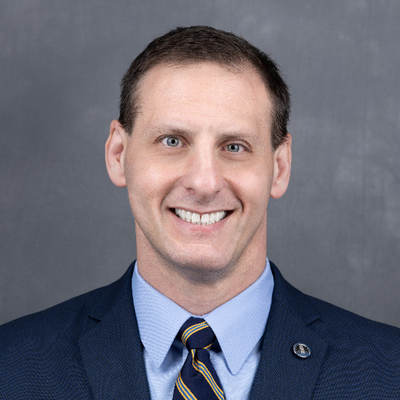
Meet the shoulder specialists who diagnose and treat AC separations, including AC joint reconstruction for patients across the Barrington Orthopedic Specialists network.




Frequently Asked Questions
What Causes an AC Separation?+
The most common cause is a direct fall onto the tip of the shoulder — such as falling off a bicycle or being tackled in a contact sport — which drives the shoulder blade downward while the clavicle remains held in place, stretching or tearing the AC and CC ligaments. A direct blow to the top of the shoulder can also cause this injury. AC separations are particularly common in contact sports such as football, hockey, and rugby, as well as in cycling.
What Are the Symptoms of a Shoulder AC Separation?+
Symptoms vary depending on the grade of the injury:
- Pain and tenderness directly at the top of the shoulder, over the AC joint
- Swelling and bruising around the joint
- A visible bump or elevation at the top of the shoulder (more pronounced in higher-grade injuries)
- Pain with overhead movements, reaching across the body, or lifting
- Weakness in the shoulder
- Limited range of motion
Mild Grade I injuries may cause only minimal pain with no visible deformity, while Grade III and higher injuries produce a clearly visible and sometimes dramatic bump at the shoulder.
How Is an AC Separation Graded?+
AC separations are classified on a scale from Grade I to Grade VI based on the severity of ligament damage and the degree of joint displacement. Grade I is a mild sprain with no displacement; Grade II involves partial ligament tears with minor displacement; Grade III involves complete ligament rupture with notable joint separation. Grades IV through VI involve more severe or unusual patterns of displacement. The grade guides treatment decisions — lower-grade injuries are almost always managed conservatively, while higher-grade injuries are more likely to be considered for surgical reconstruction.
When Is Surgery Needed for an AC Separation?+
Surgery is not always necessary for AC separations, and many patients recover well — even with a persistent bump — through conservative care alone. Surgery is generally considered when pain persists after an adequate trial of nonsurgical treatment, when the deformity is severe and functionally limiting, or when a high-grade injury (Grade IV or higher) makes conservative management unlikely to succeed. Even in cases that initially appear to require surgery, it is often worthwhile to allow time for conservative treatment to work before proceeding, and reconstruction of the CC ligaments works well even when performed months after the initial injury.
What Is Recovery Like After Treatment for an AC Separation?+
Recovery timelines vary by the severity of the injury and the treatment approach:
- Conservative treatment (Grade I–II): Most patients return to light activity within two to four weeks and to full activity within six to eight weeks.
- Conservative treatment (Grade III): Return to full activity typically takes six to twelve weeks depending on symptom resolution and rehabilitation progress.
- Surgical reconstruction: Most patients begin range-of-motion exercises within a few weeks of surgery and progress through a structured rehabilitation program over three to six months. Return to sport or full overhead activity generally takes four to six months.
Rehabilitation following both surgical and nonsurgical treatment is essential for restoring full motion, strength, and shoulder function.